Showing posts with label soil quality. Show all posts

Monday, March 15, 2010

Floccing Shit


Madu Bigmeat: So things are going fairly well with my newest round of latrines and soak pits… But I dunno, James Brown II… should I be focusing the whole time on wastewater management? Should I return to teaching people how to treat their well water?

James Brown IV: Sorry man, I think you’ve got us cats confused!!! I’m the fourth James Brown you’ve had hanging round this gwa!

Madu: James Brown IV?!?!?! Damn, son. I’ve been going through you cats so fast that I’ve lost track.

James Brown IV: Whatchoo talkin’ bout, Madu?

Snoop Dogg: I think you should break him the bad news, being his master and all.

Madu: You see, James Brown IV, due to the low content of vitamins and minerals in a diet of millet goop and peanut oil, the townsfolk of Sanadougou are suffering from acute malnutrition – especially the children. One of the most important things which Malians are lacking from their diet in sufficient quantities is protein. And so, James Brown IV, it is quite common for my malnourished neighbors to hunt other people’s cats when they wander around at night– hence the suffix after your last name.

James Brown IV: But… but… why?!?! Why would anyone want to eat a cute little kitten like me? There’s hardly any meat on these bones!!!

Madu: You’re right, but the fact that there is meat on those bones – and not enough of it on the bones of all the children here in Mali. That’s why you’re inevitably going to get eaten.

James Brown IV:
Inevitably?!?!?!

Mdu: Yeah, the fact of the matter is that all animals raised in this society – whether they be cows, goats, chickens, dogs or cats – are eventually destined for the food bowl. It’s been hard, but I’ve come to terms with this. And I’ve come to accept that both of you will also one day be eaten by my malnourished neighbors… though in the meantime, I’m going to give you all the tender love and care that I can.

Snoop: That’s the truth, fo’ sure!

James Brown IV: If only it didn’t have to be like this!!! If only!!!

BrzzzzzzzzZZZZZZZZZZZZZZZZZAAAAAAAAAAPPPPPPPP!!!!!!!!!!!
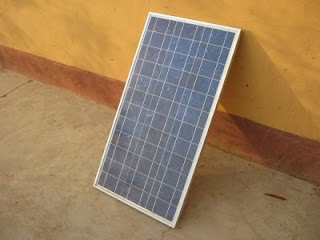


Al Gore: There is in fact logic to that assertion, for it in indeed possible to address the root cause of this pet-eating behavior amongst the local populace.

Madu: Al Gore!!!! What in tarnation are you doing here?!?!?! There is no way that your academic brainpower can solve this problem.

Al: Your claim is lacking in foundation, for there exist sound methods of improving the nutritional content of the typical Malian diet and therefore obviating the demand for feline and canine proteins.

Madu: Shove it up your converter box, Al. There simply isn’t enough water to grow any food here in substantial quantities beyond millet and peanuts. And if anyone gets their hands on any money, they’re going to blow it on tea and sugar and toys. Unless you’ve got a solution that requires no water and no money, then it’s not going to fly.

Al: There are in fact a multitude of species of plants edible to humans and possessing a plethora of nutritious elements which can be grown in environments with little to no water. For example, one such species, among the most promising of crops to be disseminated for the objective of improving nutrition in the developing world, is the Moringa oleifera – a tree native to the foothills of the Indian Himalayas commonly known as the “moringa”.


For millennia Indians have eaten the pods of the Moringa – which they call “saragwa” and is consumed fried and in sanbars and curries. In addition, the moringa leaves can be cooked like spinach and are even more nutritious, containing significant amounts of Vitamin A, Vitamin C, protein, calcium, iron, phosphorus and potassium. If each Malian child were to drink a serving of moringa leaves crushed into powder and stirred with water into a beverage – perhaps with a little sugar or lemon for taste – it would be the nutritional equivalent to eating an orange, a carrot, a banana and drinking a glass of milk.

James Brown IV: So you’re saying that if these kids eat these leaves, they’ll have their protein and won’t want to eat my cute little self?

Al: Well, there is no certainty that Moringa oleifera alone can serve as a causal factor in such a momentous behavioral change; however, if this species could be cultivated to such an extent that the present nutritional deficiencies in Malian culture were abated then it is reasonable to surmise that the demand for feline protein would reduce significantly.

Snoop: And dogs?

Al: Yes, improved nutrition would probably reduce the demand for canine protein as well.

Snoop: Y’know, I think this solar panel pinhead over here’s got some sense in him. Everyone here eats their toh with baobab leaves in the sauce – adding moringa leaves wouldn’t be such a big change in their habits!

Madu:
Okay, so this tree’s nutritious – I get it. But why should people farm these trees to eat the little leaves and pods when they could grow oranges and bananas and carrots instead?

Al: Unlike all of the crops which you just mentioned, moringa is a relatively easy and cheap crop to cultivate. After sugarcane, oranges, bananas and carrots are amongst the most water-intensive crops that are grown in this country – and in addition to intensive irrigation during the dry months and even during rainy season, they require much intensive fertilization and maintenance. Oranges and especially bananas do not start bear fruit until many years have passed since planting.


Alternatively, moringa requires little to no irrigation to be a productive crop. Of course, irrigation is linked to extremely high rates of growth and the bearing of pods and leaves, but Moringa will sprout pods and leaves even with no precipitation or irrigation. If it receives no moisture at all for extremely lengthy periods of time it will shed its leaves and go dormant, feigning the appearance of death, but in fact it will remain alive to blossom upon the receipt of the next rainfall.

Madu: Is that it?

Al: No, Moringa oleifera also serves additional benefits to most that lie adjacent to it – with the notable exception of corn. Moringa is a nitrogen-fixing legume – which means that it fosters cultures of bacteria on and around its roots which take nitrogen and convert it into ammonia, enriching the nutritional content of the soil and thereby improving the yields of adjacent and/or subsequent garden crops.

Madu: Alright, fine. Now that’s it with the benefits of moringa – right?

Al: Your assumption is erroneous, for Moringa oleifera can also serve to assist in the treatment of water for drinking purposes and even in wastewater treatment, because the seeds of the plant contain a cation which is polarized and can therefore assist in flocculation.

Snoop: Fuck you too, man.

Al: You see, if particles of polluting matter are suspended in a solution, it is often because they are of the same usually negative charge and hence do not aggregate together – or rather, they do not “floc”. But certain polarized substances can catalyze these colloids to floc into the noun form – a floc – and accumulate sufficient weight to sink down to the bottom.


Moringa seeds contain so many of these aforementioned cations that if they are crushed into a fine powder with a mortar and pestle, they can serve as practical flocculants for use even in a non-monetary economy or those where commercial flocculants such as aluminum chloride or polyaluminum sulfate are otherwise unavailable on the market.


Madu:
So what you’re saying is, if there’s little bitty poo particles in someone’s well, if you add moringa seeds then they’re going to form big pieces of poo and settle on the bottom of the well? How is moving the poo from the top of the well to the bottom of the well going to make it more sanitary?

Al:
Even if the entire body of water is not potable, since the vast majority off well water is taken from the top of the well, or if someone fills a cup from the top of the water jug it is almost certainly from the top of the water jug, the process of flocculation per se will reduce the total quantity of fecal particles consumed by that individual.

Madu: So I should just quit it with the chlorine treatment and just start filling my water filter with moringa seed powder?

Al: If you possess the means, it would be advisable to do both, for flocculation in fact expedites chlorination and renders it more effective overall. Sodium hypochlorite – bleach – purifies water only by killing and removing pathogens such as bacteria and amoebas; however, it is limited by the overall mass of pollutants suspended in the body of water at hand. If each particle of sodium hypochlorite can kill and remove exactly one unicellular pathogen, and if the number of bleach particles is greater than or equal to them number of pathogens, then chlorination is an adequate method of water purification. However, if the number of pathogens exceeds that of bleach particles, then the population of pathogens can be lessened but not annihilated and can even grow resistant over time. Flocculation increases the efficacy of chlorination by floccing the pathogens together into a lesser number of larger, heavier particles.


Madu: So this moringa tree thing, all I have to do is plant the seed, maybe I should water it a little if I’d like but I don’t really have to, and the tree that grows out of it improves nutrition, it improves the yields of all of the other plants in its garden, and it can even make drinking water treatment more effective. Is there anything that this tree cannot do?

Al: To my knowledge, it remains unable to encourage Malians to wash their hands before eating and sharing their fecal matter through the common food bowl.


Thursday, January 21, 2010

Water and Sanitation and Extraterrestrial Amphibians and Penises on the Dogon Plateaus


Mali is home to one of the few most isolated and anthropologically fascinating cultures in the world: the Dogon tribe. Originally the Dogons were a paganist tribe which hailed from southern Mali where they worshipped the stars and extraterrestrial beings. That is not a misprint; the culture of the Dogon is predicated on the belief that they were visited by amphibious humanoids called Nommos hailing from a planet orbiting the Po Tolo - which in Dogon is the name of the smallest known seed. Dogon tradition espouses that Po Tolo is white in color, and that it is the heaviest star because it is made out of sagala - an uncomprehensibly heavy metal. This has also taught that the miniscule star rotates on its axis, that it has an elliptical orbit with a companion star as the focus, and that the period of Po Tolo's orbit is 50 years.

This star which does in fact exist is known to Westerners as Sirius B, an ultra-dense white dwarf orbiting Sirius A so small and so distant that it is invisible to the naked eye - technology to photograph this star did not exist until 1970. The period of Sirius B's orbit is now known to durate for exactly 50.04 +/- 0.09 Earth years. Centuries before Copernicus and Galileo, the Dogon also knew of the heliocentric solar system in that the planets revolve around the Sun, the rings of Saturn and the four major moons of Jupiter. All of this was taught by a culture which otherwise has very little history of mathematics or astronomy, no telescopic technology, and has for the past thousand years chosen to live in isolation from their neighboring tribes.

Dogon belief holds that there is a third star in the Dog Star system known as Emma Yar, and that this star is circled by a single planet from which the Nommos hail. To date, even Western astronomers equipped with the Hubble Telescope and the most sensitive photographic technology ever known to man have yet to discover a third member of the Sirius star system.


According to legend the Dogon were once the brothers of the Bambara tribe. But in the 12th century intertribal relations soured when the Bambaras and Fulanis adopted Islam en masse, because the Qur'an explicitly teaches that the enslavement of other Muslims within the Dar al-Salaam is haram, but that it is perfectly acceptable to enslave the pagans and idolaters of the Dar al-Harb. And so in the 12th century the Bambaras and the horseback-riding Fulani tribe began to raid Dogon villages for slaves. Over the next few hundred years the Dogons fled their ancestral homeland, completely relocating their society to the central plateaus by around 1490. As hostile as the terrain was, upon high vantage points accessible only by solitary mountain passes Dogon warriors with spears and slings could easily defend their villages from Bambara and Fulani raids.

The central plateaus were not such welcoming terrains either, for they were already occupied by the Tellem people. Very little is known about this ancient culture except for the dwellings they left behind in the caves and crevices of the cliffs. Judging by the dimensions of these stone and mud dwellings, the Tellem must have been a very diminutive people akin to Pygmies. Apparently the Tellem also lived in the plateaus because they sought sanctuary from hostile tribes – archaeologists have excavated so few of these huts because they are extremely difficult to reach even with 21st century rock-climbing equipment. Archaeologists believe that a millennia ago the climate of this region was so much more humid and lush that the Tellem might have been able to climb up sturdy vines to their dwellings - Dogon legend maintains that their predecessors had wings and sticky feet like geckos which allowed them to scale the cliffs.


The flightless Dogons have been unable to inhabit the cliff dwellings of the Tellem, but in the roughly eight centuries that they have been living on the flat tops of the plateaus they have built their own villages, most of them a good day’s hike from any road and accessible only by the dexterous foot, and nothing too heavy to be carried by humans can make it in or out. The style of the Dogon huts is fairly approximate to what they were building a millennia ago back when they coexisted with Bambaras and Fulanis in what is now southern Mali, but due to the hardships of this rugged terrain there are a few main differences. In my own Minianka village, logs and mud constitute 95 percent of all construction materials, but high up on top of the plateaus there are no riverbeds where one can find ample supplies of mud, there are very few trees large enough to make sturdy skeletons. In Dogon Country all structures of any sort were made primarily out of rocks fit together with no mortar. Centuries ago there were more than enough rocks large enough to build a decent hovel, but now that the population has greatly expanded they have to import dynamite to blast apart boulders into usable sizes.


Islam is gradually making headway especially with young Dogon men who have lived in the cities, but up on the plateau, most Dogons continue their traditional animist practices as though monotheism never happened. Here an elderly holy man manages a rock garden which he uses to predict the future.


He is drawing designs in the beds of sand accompanied by the arrangement of sticks, pebbles and cowry shells – which according to Dogon belief are posing questions to the all-knowing fox. In the middle of the night, the fox is expected to come and alter the designs and arrangements ever so slightly, and only the holy man pictured here can decipher the fox’s answers.

Dogon Country has all of its own special development problems. To begin, water access is prohibitively difficult; and obviously there are no bodies of water on top of these barren rock faces, there is very little precipitation, and the Dogons have built their villages upon cliffs which purposefully arduous to reach. The only way for Dogons to eat, drink, wash and bathe is to send their women down to streams in the valleys many kilometers away from the village, and every time a woman draws water she then has to climb many kilometers back up those very steep paths with a heavy bucket of water on her head. In some villages, we’re talking about an entire morning's trek just to draw a single bucket of water. Of course the water in these streams is most likely contaminated with feces and giardia cysts, so right from the bat the Dogons are suffering from more water-borne illnesses than other Malian tribes. Since the sparse water supplies are most immediately needed for drinking and cooking, the Dogons almost as a rule have insufficient water for hygiene purposes, and as a result they suffer from more prevalent trachoma, dysentery, etc. relative to comparable Malian societies. Water is so scarce for human needs alone, thus raising livestock and growing garden crops is exponentially more onerous. And since women have to spend so many additional hours merely drawing water, they have less time than even overworked Minianka women to engage in lucrative economic activity or gain an education.


Over the past half century missionaries and NGOs have been disproportionately active in the most isolated and underdeveloped cranny of Mali trying to help the Dogons achieve the basic necessities of infrastructure. For example, a French group paid the men of one village to carry cement to the base of the plateau so that they could build a catchment basin underneath a spot where rainwater drips down from the cliffs. Their cistern has done a decent job of catching water, but somehow it also caught frog eggs and fish spawn – yes, somehow fish spontaneously generated in an artificial inland pool uphill from any other body of water. So that particular village has more water now, but it’s so polluted with concentrated frog and fish feces that it is even less potable than that from the stream many kilometers away. The women of that village still have to go to the stream to draw water three times a day.

When it comes to my line of work, there’s only so much that can be realistically done. The water table is so far low under impermeable rock - the lowest point of some villages is multiple hundreds of meters above - that hand-dug wells are not a possibility. Even in the valleys below the cliffs, the only way that one could possibly reach the water table is by drilling a well with mechanized drilling tools which are themselves extremely heavy and difficult to transport by hand up and down mountains to the isolated valleys where they could be of any use to Dogon villages. In so many words, the equipment needed to simply drill a well is so expensive that the Dogon could never finance a well project on their own. But even if an NGO parachutes in and drills a well in the valley to provide a particular village with a source of potable water, the women of that village still have to make their arduous hike down to the valleys and back up to use any drilled wells or hand-pumps.

Even worse than the water access problem, there is an unavoidable waste management problem inherent in living on top of a plateau. Even the mud brick “traditional nyegens” built in my own village are not practical technologies in Dogon Country – they’re living on top of solid rock, and short of a ready supply of dynamite it is impossible to dig a latrine pit by hand. Technically, one could theoretically blast a latrine pit with dynamite, but dynamite is already so expensive that the impoverished Dogons would never use it for anything other than to provide rocks for their own houses.

When Peace Corps Volunteers come into these villages to live for two years, PC Bamako has to first come in and ensure that our own housing needs are adequate - and Peace Corps regulations entail that doing as the Dogon villagers do and pooping out by the pooping rocks is quite inadequate. That means that if a Volunteer is going to live in a Dogon village, PC Bamako usually has to come in beforehand and build these revolutionary new “toilet” things just so that we can live there ourselves. It is next to impossible to dig a latrine pit down into the solid rock plateaus, so they have to take rocks and cement and “dig” up. Instead of digging a latrine pit, they build up a large one-story basin which serves as an above-ground latrine pit, and so our raised nyegens in Dogon Country are on the 2nd floor.